

Plain grey concrete does the job, but it rarely gets a second look. If you’re building a new home in Toowoomba or finally replacing a tired, cracked driveway, chances are someone has already mentioned exposed aggregate.
An exposed aggregate driveway shows off the stones inside the concrete instead of hiding them under a smooth grey top. It’s tough, it grips well in the wet, and it hides a lot of the dirt and tyre marks that make a driveway look old before its time. Below we cover how it’s made, the colour blends people pick, what affects the price and how to look after it once it’s down.
What Is an Exposed Aggregate Driveway?
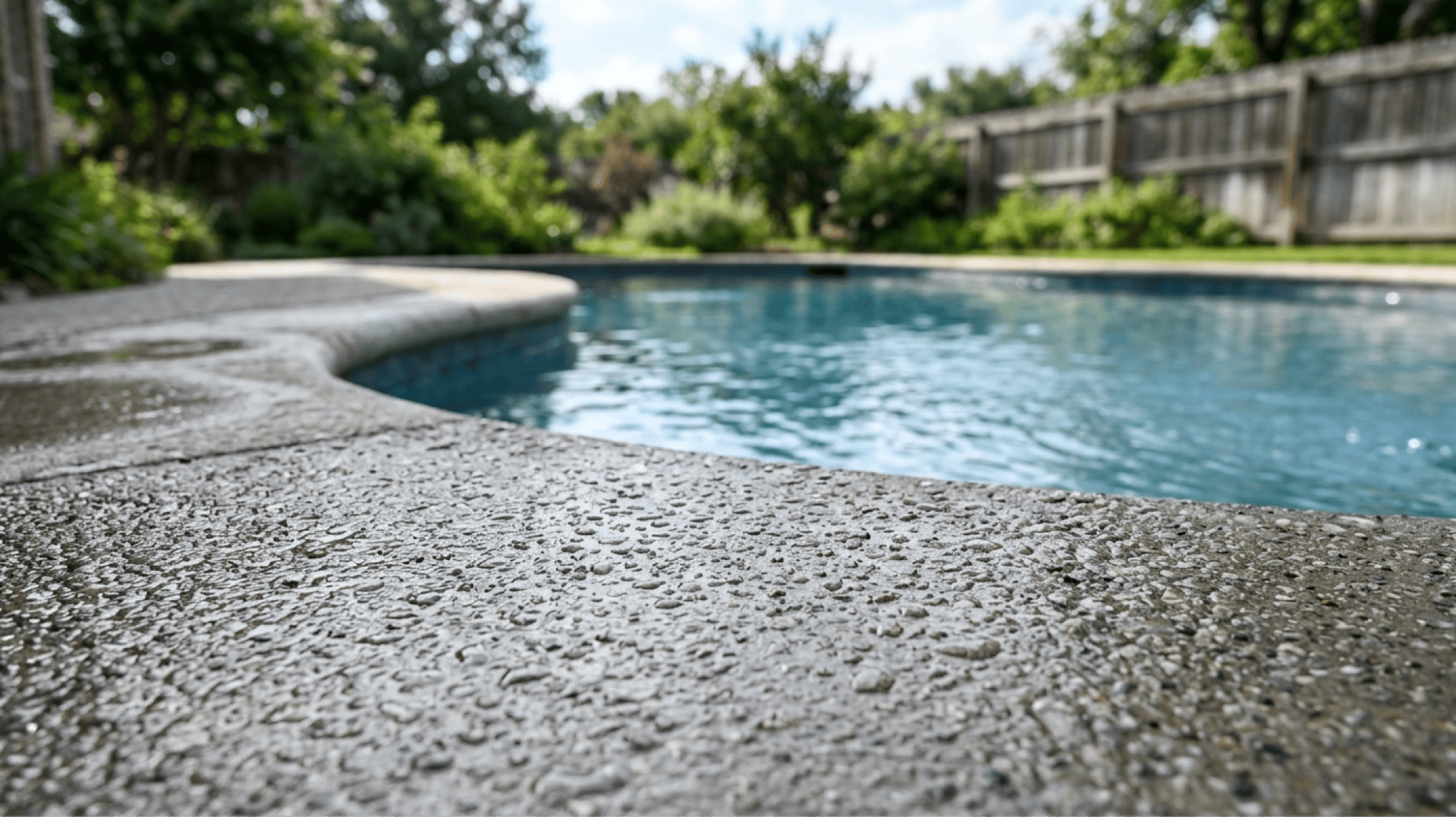
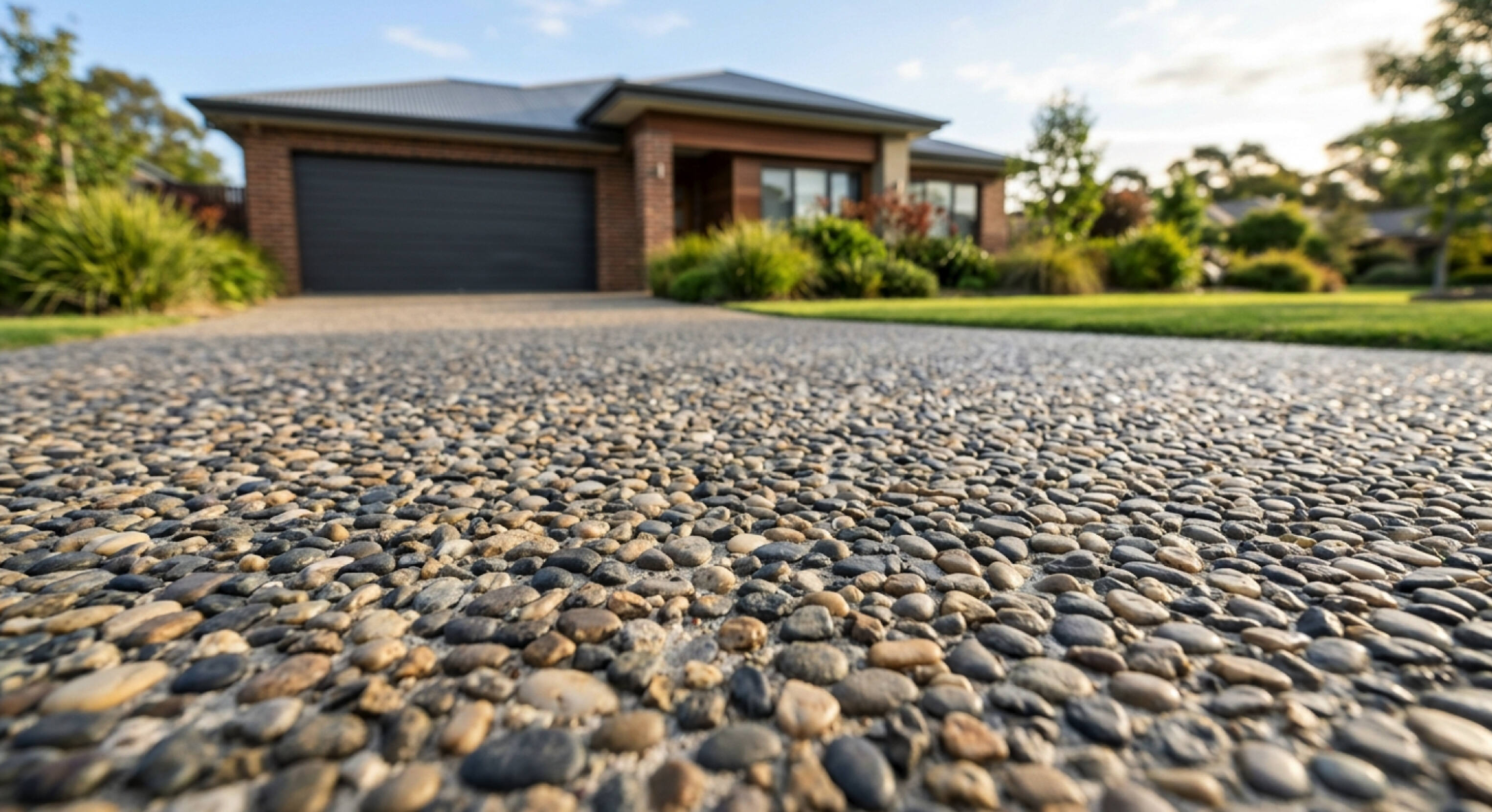
Concrete is a mix of cement, sand, water and stone, and that stone is called the aggregate. On a standard driveway the top is finished smooth or broomed, so all you see is the cement paste. With exposed aggregate, the top layer of paste is washed away while the concrete is still setting. That uncovers the rounded stones sitting just under the surface.
The stones can come in a decorative premix or be spread over the fresh slab by hand. Either way, you end up with a textured, natural-looking surface that’s still a full-strength concrete driveway underneath. If you want to see how it would suit your place, we build exposed aggregate driveways in Toowoomba and the surrounding areas.
Pros and Cons of an Exposed Aggregate Driveway
It’s a popular choice for good reasons, but it isn’t right for every home. Here’s the honest version.
The Pros
- Better grip than smooth concrete, especially on sloping blocks and in wet weather
- Hides dust, leaf stains and tyre marks far better than plain grey
- A hard-wearing surface that handles daily car traffic
- Plenty of colour and stone options, so it can match the house, paths and pool area
The Cons
- Costs more than a plain or broom finish because of the extra materials and labour
- Rougher underfoot, so it’s not ideal for areas where kids play on their knees
- It needs sealing, then resealing every few years, to keep the colour and hold the stones in place
For most families the trade-off is worth it. You look at your driveway every day, and exposed aggregate keeps looking good with far less fuss.
Popular Exposed Aggregate Colours for Toowoomba Homes
The colour comes from two things: the stones and the concrete around them. Suppliers offer dozens of blends, but most Toowoomba driveways end up in one of four groups.
Salt and Pepper Exposed Aggregate
A mix of white, grey and black stones in a light grey base. It’s the safe pick. It suits brick, rendered and weatherboard homes alike, and it’s very good at hiding dirt.
Charcoal Blends
Dark stones in a charcoal base look sharp next to modern homes with black window frames or a dark Colorbond roof. The catch is heat. Dark surfaces get hot in summer, so keep bare feet in mind if the driveway runs past the pool.
Warm and Earthy Tones
Browns, creams and rusty reds sit nicely with sandstone, older brick and the character homes you find in Toowoomba’s established suburbs.
Light and White Blends
Pale stones in a white or light grey base give a bright, clean look and stay cooler underfoot. They show tyre marks a bit more than the mid tones, so they suit homes where the car mostly lives in the garage.
Tip: a small sample looks different from a full driveway. Ask to see a finished job, or have a look at our recent driveway projects to get a feel for how a blend looks at full size and in real light.
How Much Does an Exposed Aggregate Driveway Cost?
Exposed aggregate is usually priced per square metre, and it generally costs more than a plain concrete driveway. Your site has more say in the final figure than anything else. The biggest factors are:
- Size and shape: long, narrow or curved driveways take more formwork and time
- Site preparation: removing an old slab, digging out or levelling the ground all adds cost
- Ground conditions: Toowoomba’s reactive clay soils can call for a deeper base or extra reinforcement
- The stone blend: some decorative aggregates cost more than others
- Access: if the concrete truck can’t get close, a pump may be needed
- Sealing: the first seal is usually part of the job, but it’s worth checking what’s included
The only way to get a real number is a site visit. A quote over the phone can’t account for slope, drainage or what’s hiding under the old concrete.
How We Build an Exposed Aggregate Driveway
Good exposed aggregate comes down to preparation and timing. Here’s how the job runs.
1. Site Preparation and Base
We clear the area and set the levels and falls so water runs away from the house and garage. Then we lay and compact a solid base. Reinforcement mesh goes in on bar chairs so it sits at the right depth in the slab.
2. Pouring and Placing the Aggregate
The concrete is poured, screeded and floated. If the stones are being seeded, they’re spread evenly across the surface and pressed in.
3. Washing Off at the Right Time
This step makes or breaks the finish. A surface retarder slows down the top layer, and once the slab underneath has firmed up, the top paste is washed off to show the stones. Go too early and stones pull out. Leave it too late and they stay buried.
4. Cutting Joints, Cleaning and Sealing
Control joints are cut to help manage cracking, the surface is cleaned, and a sealer goes on once the concrete has cured enough. The sealer brings out the colour and helps fight stains.
Caring for Your Exposed Aggregate Driveway
Exposed aggregate is low maintenance, but low isn’t zero. A few simple habits keep it looking good for years:
- Sweep or blow off leaves regularly so they don’t leave tannin stains
- Clean up oil and fuel spills quickly with a degreaser made for concrete
- Hose it down a few times a year and give it a gentle pressure clean when needed
- Skip harsh acids, which can eat into the sealer and dull the stones
- Reseal every few years, or sooner if water stops beading on the surface
Toowoomba throws hot summers, frosty winter mornings and heavy storms at outdoor surfaces. Keeping the sealer in good shape is the best protection you can give your driveway.
Exposed Aggregate Driveway FAQs
Is exposed aggregate slippery?
No. It’s one of the grippier concrete finishes because the stones give tyres and shoes something to hold onto. A glossy sealer can make it a little slicker when wet, so ask about an anti-slip additive if your driveway is steep.
How long does an exposed aggregate driveway last?
A well-built one can last for decades. Most of that comes down to the base, the reinforcement and the drainage rather than the finish itself.
Does exposed aggregate need sealing?
Yes. Sealing protects the surface from stains, helps lock in the stones and brings out the colour. Plan to reseal every few years.
Book a Free Driveway Quote
Keen on an exposed aggregate driveway? We’ll come out, look at your site and talk you through colours, costs and timing. Get a driveway quote or call us on 07 4633 0909.
Griffiths Concrete & Construction is a family-owned business with over 30 years of experience in concreting in Toowoomba and across the Darling Downs, including Highfields, Dalby, Crows Nest, Warwick and Gatton.
Share this Post
Transform Your Space with Expert Concrete Solutions!
Elevate your property with high-quality, durable concrete work. From driveways to custom designs, Griffiths Concrete Construction delivers precision and style.


