

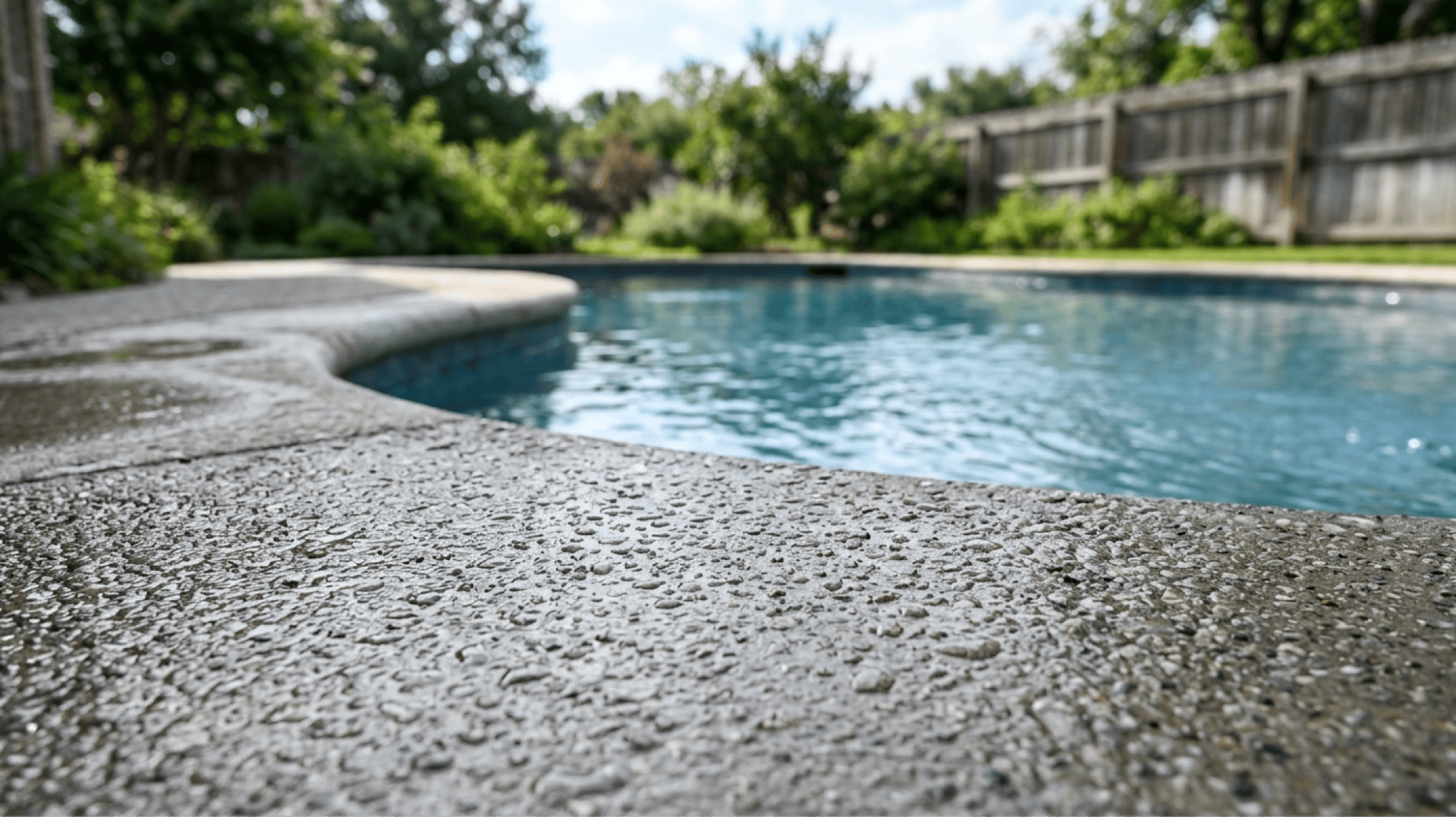
Wet feet, smooth concrete and kids who forget the no-running rule. Every pool owner knows how that combination can end. Slips around the pool are easy to prevent, but they hurt when they happen, and the surface you choose plays a big part.
Non-slip pool surrounds don’t come from one magic product. They come from the right concrete finish, the right sealer and a bit of regular care. This guide explains how slip ratings work in Australia, which finishes grip best, and what Toowoomba pool owners should think about before the concrete goes down.
Why Slip Resistance Matters Most Around a Pool
A pool surround is wet more often than any other outdoor surface at home. Swimmers drip across it, splash water over the edge and walk on it barefoot. Add sunscreen, pool chemicals and a bit of algae in the shady corners, and concrete that feels fine when dry can turn slippery quickly.
Children and older family members are the most at risk. Kids run, and a fall is more serious for older people. That’s why grip should be the first thing you decide on, ahead of colour or style, and why we put it first when building slip-resistant pool surrounds around Toowoomba.
Pool Surround Slip Ratings Explained
In Australia, slip resistance is tested and classified under AS 4586, the standard for new pedestrian surface materials. A companion handbook, HB 198, recommends minimum ratings for different areas. There are two tests you’re likely to see on product sheets and quotes.
The Wet Pendulum Test (P Ratings)
A pendulum with a rubber slider swings across a wet sample, and the result is given as a P rating from P0 to P5. P5 is the most slip resistant. HB 198 recommends at least P4 for swimming pool surrounds and P5 for ramps and steps leading into the water.
The Wet Barefoot Ramp Test (Class A, B and C)
Because people walk barefoot around pools, there’s also a barefoot test. A sample is soaked with water and tilted at a steeper and steeper angle while a person walks on it. Results are given as Class A, B or C, with C the grippiest. HB 198 recommends Class B for pool surrounds and Class C for ramps and stairs into the water.
HB 198 is guidance rather than a law for private backyard pools, but it’s the benchmark most designers, suppliers and builders work to. When you’re comparing quotes, ask what rating the finished surface is expected to reach.
The Best Slip Resistant Concrete Finishes for Pools
Concrete on its own isn’t grippy or slippery. The finish is what makes the difference. Here’s how the common options compare when wet.
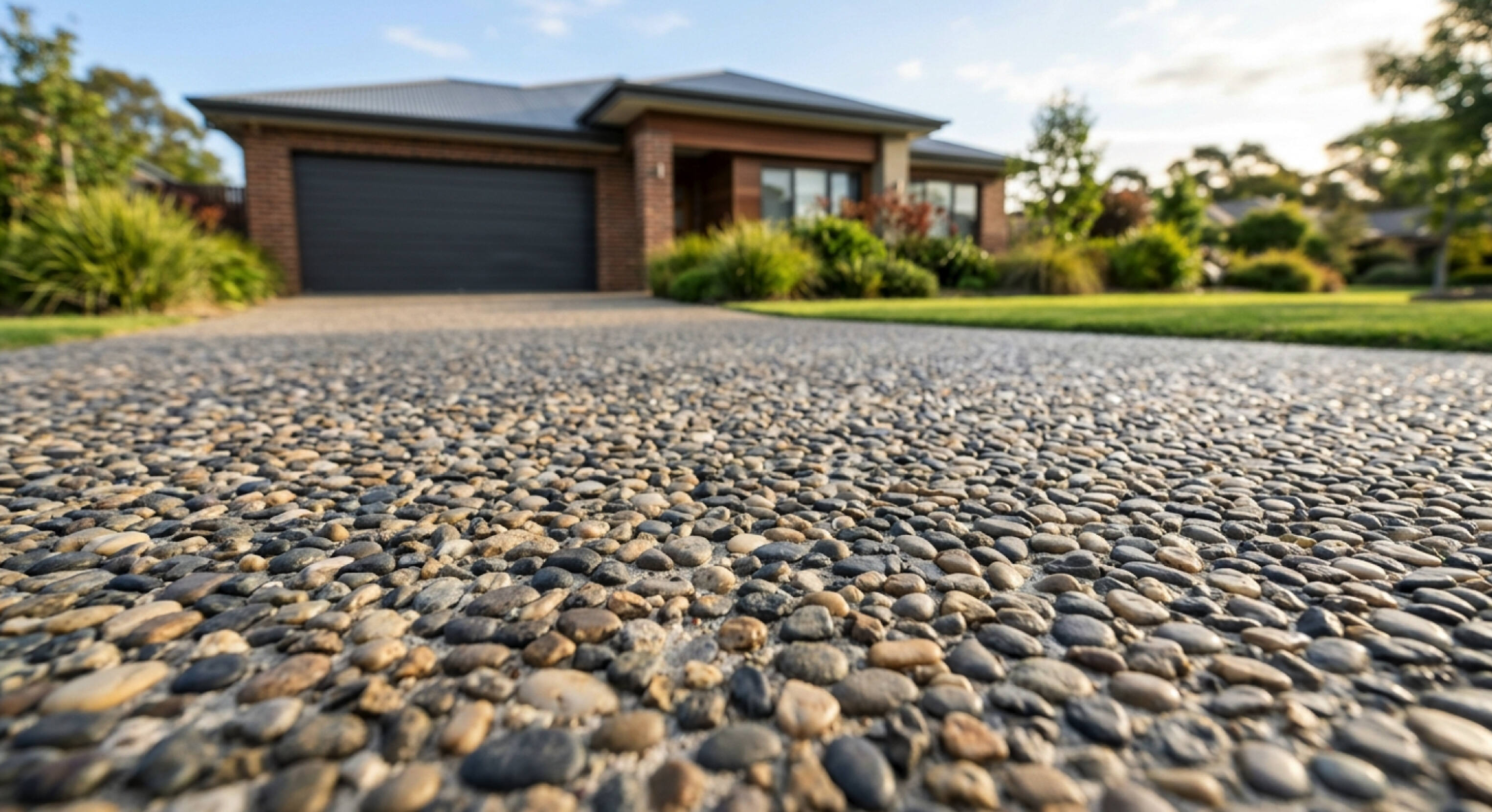
Exposed Aggregate
Rounded stones across the surface give bare feet plenty to hold onto. It’s one of the grippiest finishes and it hides dirt well. Choosing smaller stones makes it more comfortable underfoot.
Broom Finish
A broom dragged across the fresh concrete leaves fine ridges that improve grip. It’s simple, affordable and effective, though it looks plainer than the decorative options.
Honed Concrete With an Anti-Slip Sealer
Honed concrete is smooth and stylish, but it needs an anti-slip sealer with grit mixed through it to be safe when wet. Done properly, it’s a popular middle ground between looks and grip.
Textured Spray-On Coatings
A textured coating sprayed over the concrete adds grip and colour. It can also be a good way to refresh an older surround that has worn smooth.
What to avoid: highly polished or glossy-sealed concrete in the main wet zone. It can look great, but a smooth, shiny surface is the hardest one to stay upright on when it’s wet.
Anti Slip Pool Concrete: Sealers and Additives
Most concrete around a pool is sealed to protect it from chlorine, salt and stains. The catch is that some sealers, especially glossy ones, make the surface slicker. Your choice of sealer matters just as much as the finish.
Anti-slip sealers have a fine grit, such as aluminium oxide or polymer beads, mixed into the final coat. You can barely see it, but it gives feet more traction. Matte and penetrating sealers are also less slippery than high-gloss products. Ask your installer which sealer they use and whether the grit is included in the price.
Pool Edge and Other Safety Details to Plan
Grip isn’t the only thing that keeps a pool area safe. A few design details make a big difference:
- Falls and drainage: the surround should slope gently away from the pool so water runs off instead of sitting where people walk
- The pool edge: a rounded (bullnose) edge is kinder on hands and knees than a sharp one, and a contrasting colour makes the edge easier to see
- Steps and level changes: these need the most grip of all, so plan for a P5 or Class C surface
- Pool fence clearance: Queensland pool safety laws require the fence to be at least 1200 mm high from the finished ground level, with no more than a 100 mm gap underneath
That last point catches people out. New concrete raises the ground level, so a fence that was compliant before can end up too short after the surround is poured. A good concreter plans the levels around the fence from the start.
Keeping Your Pool Surround Non-Slip
Even the best finish loses grip if it’s left dirty or the sealer wears thin. A little regular care goes a long way:
- Sweep often so leaves and grit don’t build up
- Scrub off algae and mould in shady spots before it spreads
- Rinse away sunscreen, oils and pool chemical spills
- Reseal when water stops beading on the surface or the finish looks worn
- Fix any area where water keeps pooling
Toowoomba’s summer storms and cool, shady winter months can both encourage algae, so keep a closer eye on the side of the pool that gets the least sun.
Non-Slip Pool Surround FAQs
What slip rating do I need around a pool?
The Australian handbook HB 198 recommends at least P4 (wet pendulum test) or Class B (wet barefoot test) for pool surrounds. Ramps and steps into the water should be P5 or Class C.
Can I make existing concrete less slippery?
Often, yes. A deep clean followed by an anti-slip sealer or a textured coating can improve grip. If the surface is badly cracked or uneven, replacing it may be the safer long-term option.
Is exposed aggregate or honed concrete safer around a pool?
Exposed aggregate generally has more natural grip. Honed concrete can be just as safe when it’s finished with a good anti-slip sealer.
Make Your Pool Area Safer
Planning a new pool surround, or worried about the one you’ve got? We’ll look at your pool area, talk through finishes and sealers, and suggest options that balance grip, comfort and looks. Book a free quote or call us on 07 4633 0909.
Griffiths Concrete & Construction is a family-owned business with over 30 years of experience in concreting in Toowoomba and across the Darling Downs, including Highfields, Dalby, Crows Nest, Warwick and Gatton.
Share this Post
Transform Your Space with Expert Concrete Solutions!
Elevate your property with high-quality, durable concrete work. From driveways to custom designs, Griffiths Concrete Construction delivers precision and style.


